


The pool has just been vacuumed. The floor looks clean, and the water appears clear. By the following morning, a dusty layer has settled on the steps again.
For Dubai villa owners, it is tempting to blame every deposit on windblown sand. Sometimes that is the explanation. But when debris returns repeatedly—especially soon after cleaning—the maintenance team should investigate how it is entering the pool and whether it is being removed effectively.
The first step is to identify the material. Fine dust, gritty sand and debris from a filtration problem can require different solutions.
1. Start with the pattern: where and when does it return?
Before the next cleaning visit, photograph the deposits without disturbing them.
Note whether they appear across the whole floor, collect on steps or repeatedly gather close to the return outlets where filtered water enters the pool.
Also record when you first notice them:
- After windy weather.
- After nearby garden or building work.
- Shortly after vacuuming.
- After filter servicing.
- After the circulation system has been running.
These observations do not provide a diagnosis by themselves. They give your technician a useful starting point.
Instead of saying “the pool is dirty again,” you can explain that “gritty material appeared beside the same outlet the morning after the filter was serviced.”
2. Fine dust may need a different cleaning approach
Some particles are small enough to remain suspended in the water or settle into a light layer. Dust, pollen and dead algae can all contribute to fine-particle problems, so appearance alone may not identify the material.
Ask your maintenance provider whether the cleaner and filtration system are suitable for what is collecting.
Pool filters differ in how they capture fine material. Pentair notes that standard sand filters do not polish water as finely as some other filter types. That does not mean every dusty pool needs new equipment; it means the existing setup should be assessed before repeating the same cleaning method.
What helps: Identify the deposit, review the cleaning method and check filtration performance together.
Avoid adding a clarifier or flocculant simply because the water looks dusty. Ask whether a product is appropriate for the pool’s condition, equipment and planned removal method.
3. Actual filter sand may be returning to the pool
If your pool uses a sand filter, gritty deposits deserve particular attention.
A fault inside the filter can allow filter media to escape. Pentair’s troubleshooting guidance lists damaged laterals—the internal collection components—as one possible cause of sand returning to the pool.
This is a possibility to investigate, not a reason to assume the filter is broken.
What helps: Tell the technician whether the problem began after a sand change, filter repair or other equipment work. Ask them to check the filter against its manufacturer’s instructions before recommending replacement parts.
Do not open the filter tank yourself. Pool filters operate under pressure, and Pentair recommends professional filter maintenance.
4. Cleaning around the pool may be undoing the cleaning inside it
Walk around the pool edge before booking another vacuuming visit.
Is loose soil being moved nearby? Are workers cutting paving? Is someone sweeping or blowing dust towards the water? Does garden cleanup happen immediately after the pool has been cleaned?
These are practical details worth checking because they can explain repeated contamination without an equipment fault.
What helps: Coordinate the work. Complete nearby pruning, sweeping and dusty tasks before pool cleaning where possible. Collect debris rather than directing it towards the water, and tell the pool team about any ongoing construction.
For villas receiving both garden and pool maintenance, an agreed order of work can prevent avoidable cleaning.
5. The maintenance visit needs to cover more than vacuuming
A clear-looking floor is only one part of pool care.
Effective maintenance combines physical cleaning, filtration and water chemistry. Fluidra describes these as connected parts of an ongoing maintenance routine.
If sediment keeps returning, ask the provider to review what happens before, during and after vacuuming:
- What material is being removed?
- Is the cleaning equipment operating correctly?
- Does the filter need servicing?
- Has anything changed in the equipment setup?
- What follow-up check will show whether the problem is resolved?
Filter servicing should follow the instructions for the installed model. Cartridge, sand and diatomaceous-earth filters have different maintenance requirements; “backwash it again” is not a universal solution.
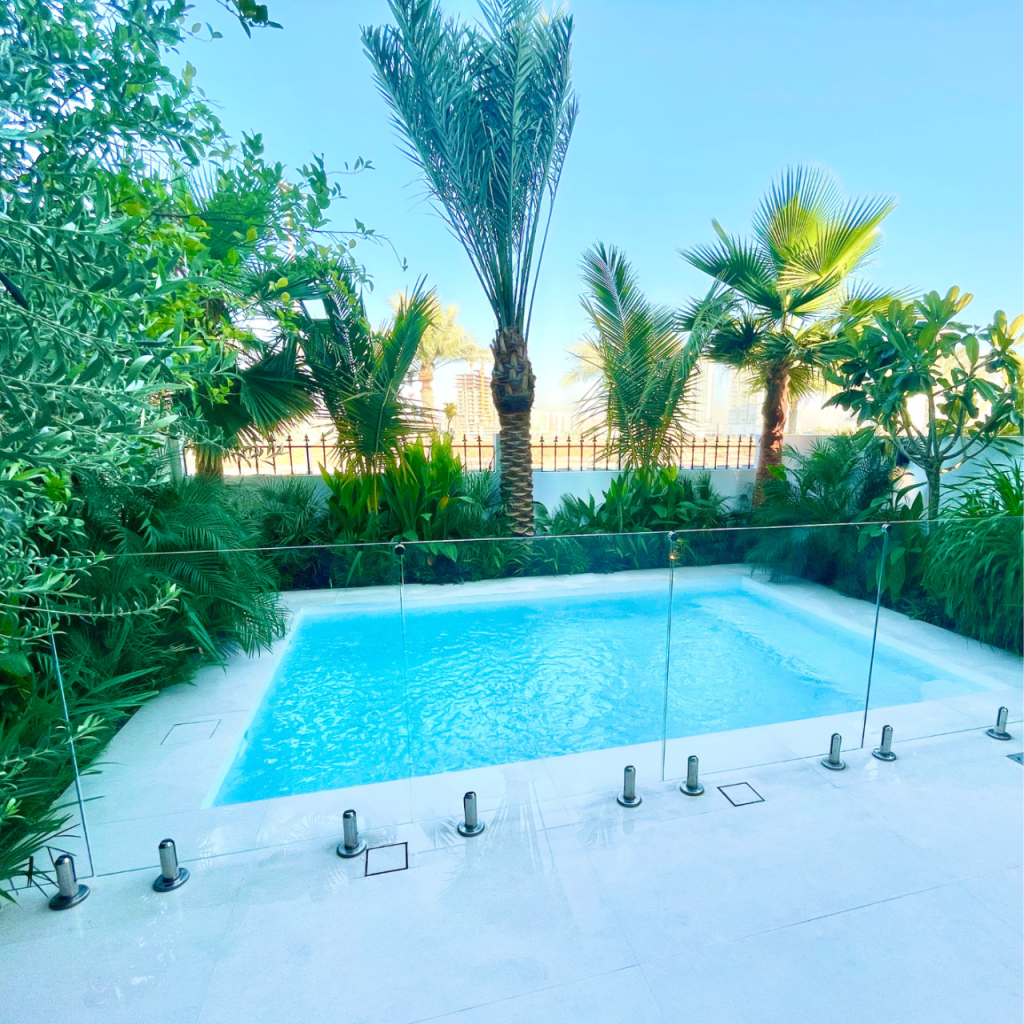
A practical guide to the next step
| What you notice | What to ask the maintenance team |
|---|---|
| Dust appears after nearby work | Can cleaning be coordinated with the work schedule? |
| Fine sediment repeatedly settles after vacuuming | Is the removal method suitable for these particles? |
| Grit appears after sand-filter servicing | Should the filter media and internal components be inspected? |
| Deposits repeatedly collect near an outlet | Can the technician observe what happens during circulation? |
| Water changes colour as well as collecting debris | Does water testing indicate a separate treatment problem? |
Use these observations to guide an inspection. They should not be treated as proof of a particular fault.
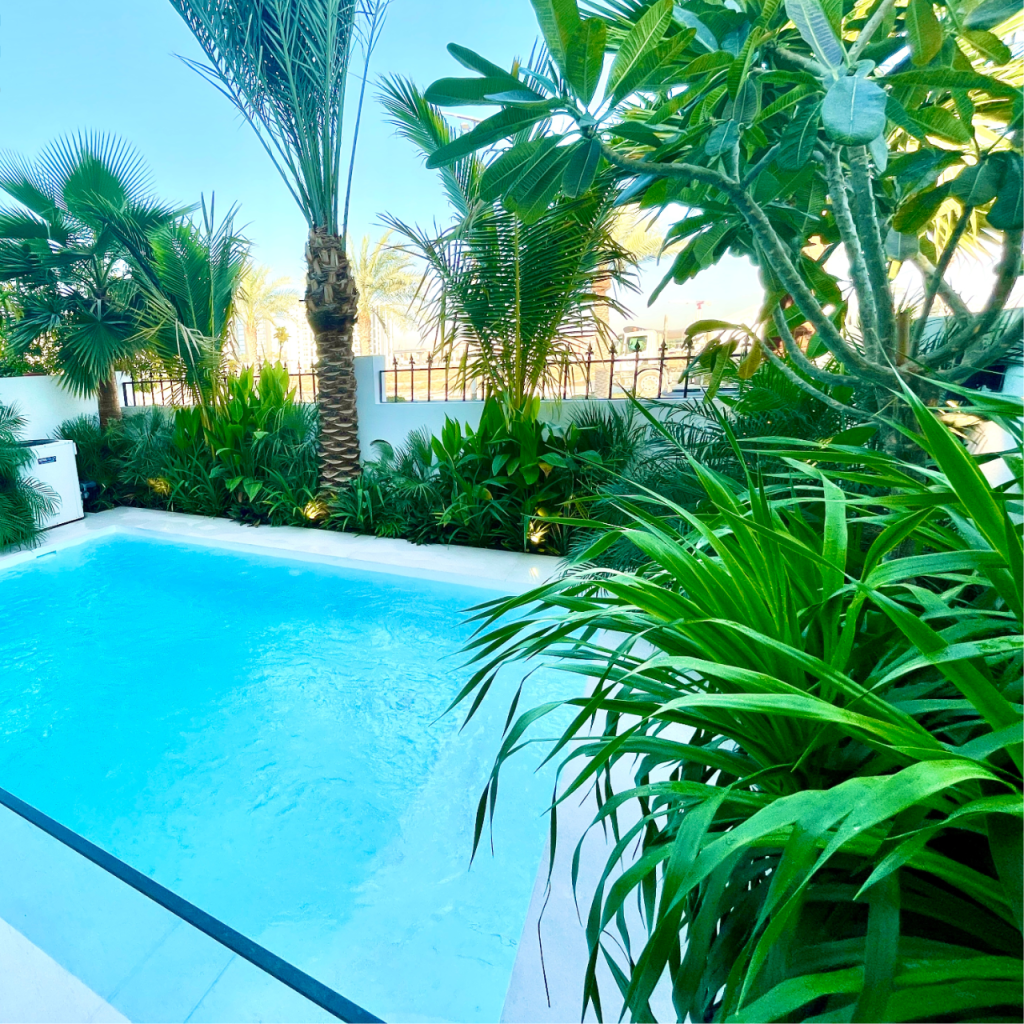
What to do after a dusty day in Dubai
Photograph the pool’s condition and let your provider know if the amount of debris is unusually high.
Ask whether an additional cleaning visit is needed and whether the filtration system requires attention. Continue the agreed water-testing routine; removing visible dust does not replace water-quality checks.
If you have a pool cover, discuss its use and cleaning with the provider. Avoid allowing accumulated dirt on the cover to fall into the water when it is removed.
Most importantly, check the result after the visit. If the same deposit returns quickly, report it with a photograph and the time it reappeared.
When should you book an inspection?
Arrange a closer assessment when the problem continues through several cleaning visits, starts immediately after equipment work or appears alongside a change in circulation.
A useful inspection should explain the likely source, what has been checked and whether further testing or repairs are required.
Before approving extra work, ask for the proposed scope and price. Routine pool cleaning, filter servicing and replacement parts may be charged differently.
Pool cleaning and maintenance with KAME Gardens
When contacting KAME Gardens, share your villa location, photographs of the deposits and any recent equipment or landscaping work.
KAME Gardens’ published pool-maintenance services include vacuuming, surface cleaning, water testing and equipment checks. Discuss which checks are appropriate for the recurring problem and confirm any separately quoted servicing or repairs.
Contact KAME Gardens for pool cleaning and maintenance in Dubai and explain how soon the debris returns after each clean.
That detail helps the conversation begin with the cause of the problem rather than another routine vacuuming appointment.
Frequently asked questions
Why does dust return the day after my pool is cleaned?
It may be entering again from the surroundings, remaining in suspension before settling or not being captured effectively. The timing, location and type of deposit help guide the assessment.
Does sand on the pool floor mean the filter is broken?
No. Sand can enter from outside. However, where a sand filter is installed, escaping filter media is another possibility that a technician should investigate.
Will adding more chlorine remove sand?
Chlorine is not a substitute for physically removing grit and checking filtration. Water treatment should follow testing, while the source of the deposits is investigated separately.
Should I replace my pool filter?
Not without an assessment. The issue may involve maintenance, a component fault, the cleaning method or an external source of debris.
Can garden and pool maintenance be scheduled together?
Yes. Agree on the order of work so that pruning, sweeping and garden cleanup do not immediately reintroduce debris into a freshly cleaned pool.
Contact KAME Gardens
Garden Maintenance | Pool Maintenance | Landscaping | Plant Supply
📞 Call / WhatsApp: +971 56 702 6368
🌐 Website: www.kamegardens.ae
📍 Location: Dubai, UAE
